


PT Shun Jia Indonesia
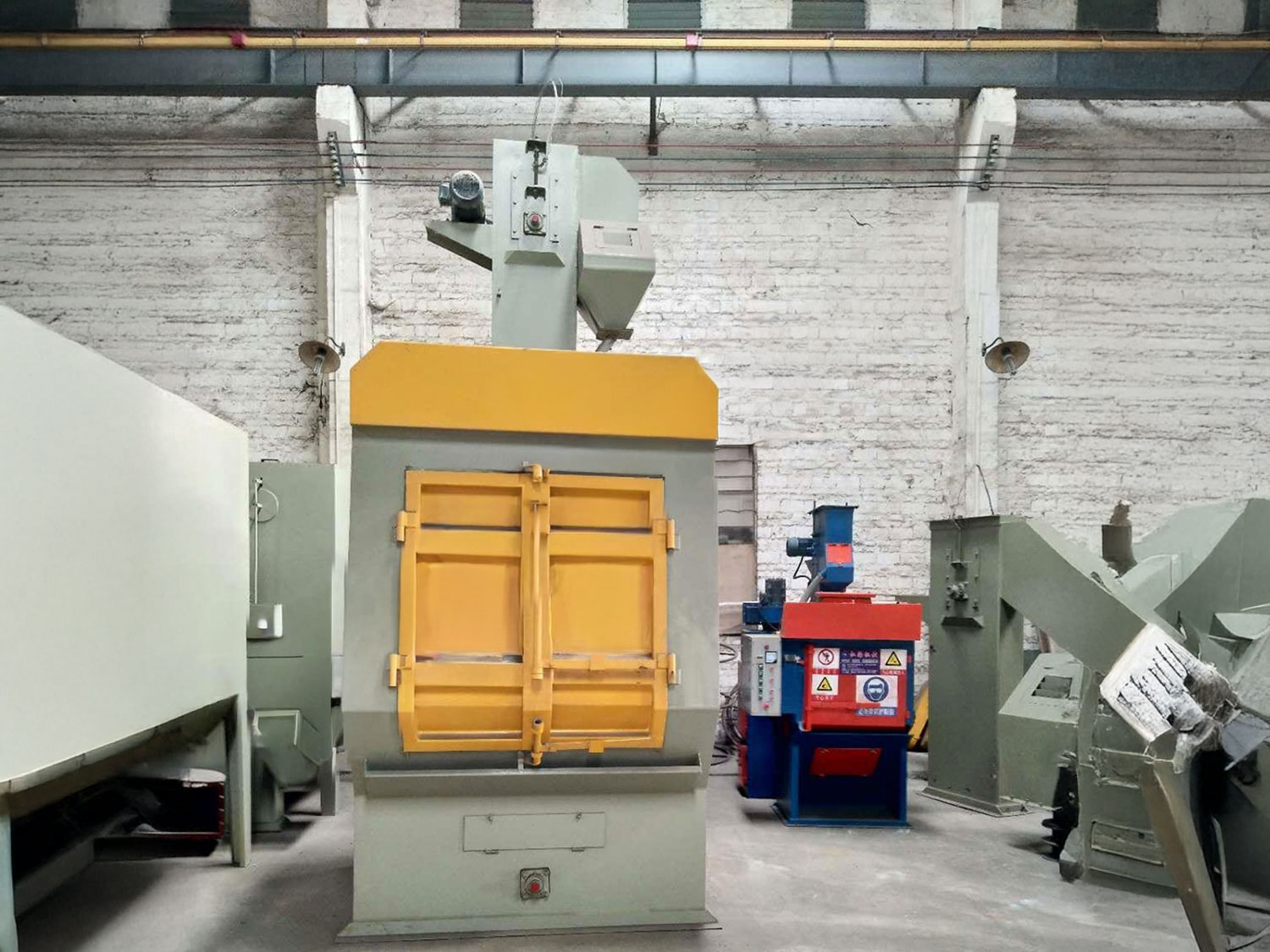
Shot blasting uses a high-speed rotating impeller to propel small steel shots at high speed toward the surface of a workpiece. The impact removes oxidation scale and other contaminants from the surface. The high-speed impact of the shots can also produce a certain degree of plastic deformation, improving the surface condition of the workpiece. Therefore, shot blasting is commonly used for surface cleaning and strengthening.
For workpieces with relatively regular shapes, the machine can usually process several surfaces by moving or rotating the workpiece. This provides high efficiency and generates relatively little pollution. Both shot blasting and sandblasting are widely used surface-treatment methods.
Shot blasting and sandblasting generally use compressed air or mechanical centrifugal force to propel abrasive materials. However, shot blasting does not necessarily require compressed air; in many applications, a high-speed rotating impeller is used.
In the steel plate pretreatment process before painting, shot blasting is commonly used to remove rust, scale, and contaminants from steel surfaces and to improve coating adhesion.
In the foundry industry, shot blasting and sandblasting are commonly used after casting to remove residual sand, oxide scale, and other contaminants from castings. For larger castings, initial cleaning is often carried out first, followed by shot blasting or sandblasting.
Research has shown that, for many metal materials, surfaces subjected to compressive stress have better fatigue resistance than surfaces subjected to tensile stress. Shot blasting can generate compressive residual stress on the surface of a workpiece, thereby improving fatigue strength and extending component service life.
Automotive steel components, for example, may undergo shot blasting or shot peening to improve their fatigue strength and durability.
Shot Blasting Process
Shot blasting uses an electric motor to drive the impeller at high speed. Under centrifugal force, steel shots with a typical diameter of approximately 0.2–3.0 mm are projected toward the workpiece surface.
The high-speed abrasive impact:
- Removes rust and oxidation scale
- Cleans contaminants from the surface
- Produces a controlled surface roughness
- Improves the appearance of the workpiece
- Can transform surface tensile stress into compressive stress
- Helps extend the service life of components
Shot blasting is widely used in many industries, including:
- General machinery
- Foundry equipment
- Automotive components
- Aircraft components
- Firearms and defense components
- Bridges and steel structures
- Steel plates
- Pipelines
- Other metal components
Sandblasting
Sandblasting uses compressed air to propel abrasive particles toward the workpiece surface.
Typical abrasive particle sizes can vary depending on the application. Different abrasive sizes produce different surface-treatment effects.
Sandblasting can be used not only for rust removal but also for oil removal, surface cleaning, and surface preparation before painting.
It is commonly used for:
- Surface rust removal
- Surface preparation
- Cleaning complex-shaped components
- Repair and refurbishment
- Steel structure surface treatment
- Preparation of bonding surfaces
For steel structures connected using high-strength bolts, surface quality is particularly important because the connection relies on friction between the mating surfaces. Sandblasting can therefore be used to prepare the contact surfaces.
Sandblasting is also suitable for components with complex shapes where manual rust removal would be inefficient or would produce uneven results.
Applications
Shot blasting and sandblasting both provide cleaning and surface-treatment functions and prepare workpieces for subsequent manufacturing processes.
The choice between the two depends on the required surface condition and application:
- Shot blasting: generally uses small steel shots and can provide both cleaning and strengthening effects.
- Sandblasting: generally uses abrasive sand or other particles and is primarily used for cleaning, rust removal, and surface preparation.
Depending on the required treatment, different abrasive materials and particle sizes can be selected.
Additional Notes
- Shot blasting is a surface-treatment process and is not limited only to castings.
- Shot blasting equipment can be used for various types of metal workpieces and industrial applications.
- Different abrasive materials, sizes, and blasting parameters should be selected according to the workpiece material and required surface finish.
Shot Blasting Machine
A shot blasting machine uses high-speed rotating blades to propel small steel shots or abrasive particles onto the surface of a workpiece. This high-speed impact removes oxidation scale, rust, and other contaminants from the workpiece surface. At the same time, the impact of the steel shots can cause controlled plastic deformation of the surface, increasing its hardness and improving the surface condition. Shot blasting is commonly used for surface cleaning and strengthening treatment.

Shun Jia Grinding Technology Co., Ltd. was established in 2003. We are a manufacturing company specializing in the research, development, and production of grinding equipment and grinding consumables. The company has always been committed to the principle of “Building a First-Class Enterprise” and aims to “Build the Shun Jia Brand.” Surface polishing technology has always been the core focus of our research and development. Through continuous improvement and innovation, after more than 20 years of development, Shun Jia has become one of the leading companies in China's grinding and finishing equipment industry.
Contact Us
PT Shun Jia Indonesia
Jl. Bulakan Bitung Jaya No.98 B
Dukuh, Kec. Cikupa, Kab. Tangerang
Banten 15710
Tel: 021-89088940
Whatsapp: 082319325297
Wechat : 17779425033


Copyright © PT Shun Jia Indonesia.
Website Design by Yopdesign.