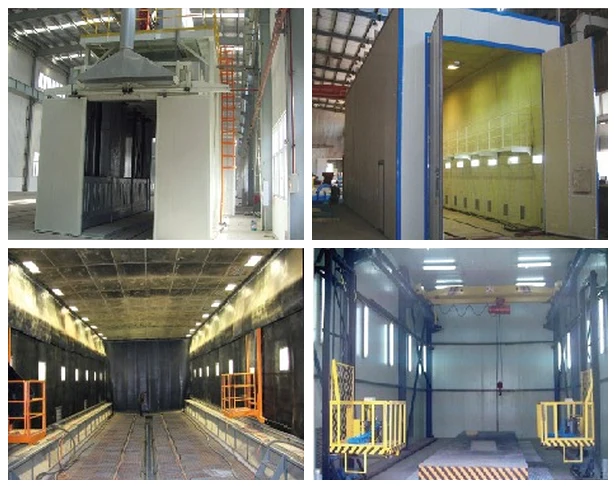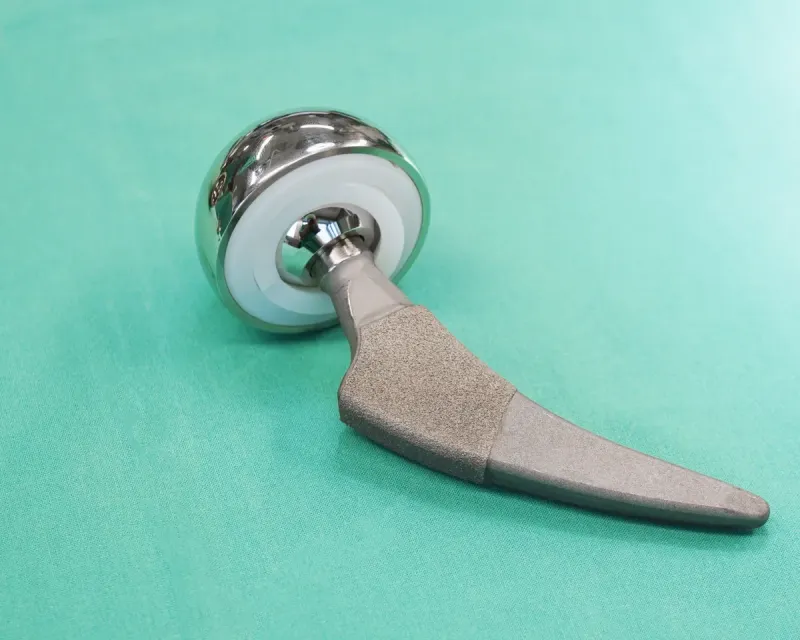




Shot blasting and sandblasting both clean surfaces by throwing abrasive at them, but they throw it in different ways. Shot blasting uses a fast-spinning blast wheel, while sandblasting uses compressed air from a compressor. This difference makes each one right for different work. See also our shot blasting machines and sandblasting machines.
What is shot blasting?
Shot blasting throws steel abrasive (steel shot or steel grit) at the part with the centrifugal force of a blast wheel. Everything happens inside an enclosed machine: the abrasive is thrown, falls, is lifted by an elevator, separated from the dust and reused. That makes shot blasting very efficient for high volumes, such as castings, forgings, steel plates and sections.
What is sandblasting?
Sandblasting sprays abrasive through a nozzle with compressed air. The operator aims the nozzle by hand, so the process is flexible for complex shapes, very large objects, and site work such as tanks, ships or steel structures. The full explanation is in the article what is sandblasting.
Shot blasting and sandblasting compared
| Aspect | Shot blasting | Sandblasting |
|---|---|---|
| How abrasive is thrown | Blast wheel (centrifugal force) | Compressed air from a compressor |
| Abrasive | Steel shot, steel grit, cut wire, stainless shot | Garnet, steel grit, glass beads and others |
| Speed | Very fast for high volumes | Slower, depends on the operator |
| Part size and shape | Fairly regular shapes; size limited by the machine | Complex shapes and very large sizes |
| Location | In the factory, fixed machine | In the factory (blast room) or on site |
| Operating cost | Low per part; abrasive is recycled | Higher; large compressor and often single-use abrasive |
| Initial investment | Higher | Lower for open systems |
| Labour | Little, can be automated | An operator at every nozzle |
When to choose shot blasting
- Parts arrive continuously in large quantities.
- They have fairly regular shapes: castings, forgings, bolts, springs, plates, sections, beams or pipes.
- You want a low cost per part and a consistent result.
- Shot peening is needed to improve the fatigue life of components.
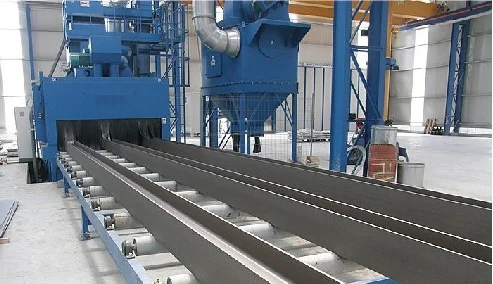
Choose the type by the part: crawler for small parts that can take impact, rotary table for flat parts, hook for large parts, and roller conveyor for steel plates and sections.
When to choose sandblasting
- The object is very large or cannot be moved.
- It has a complex shape with many corners and cavities that a blast wheel cannot reach.
- The workload is irregular or project-based.
- A special finish is needed, for example a satin surface with glass beads.
Examples from the field
- Foundries: removing moulding sand and scale from thousands of castings a day. Usual choice: crawler or hook type shot blasting.
- Steel fabrication and construction: cleaning plates, sections and beams before painting. Usual choice: roller conveyor shot blasting in the factory, sandblasting for repairs on site.
- Shipyards and tanks: ship hulls and large tanks almost always use pressure-pot sandblasting.
- Automotive and springs: shot peening with steel shot or cut wire in a shot blasting machine to improve fatigue life.
- Aluminium and stainless steel: sandblasting with glass beads or shot blasting with stainless steel shot for a clean result with no rust stains.
Common questions
What is shot blasting?
A process that cleans or strengthens metal surfaces by throwing steel abrasive with a fast-spinning blast wheel inside an enclosed machine.
Which is cheaper?
For the initial investment, open sandblasting is cheaper. For the cost per part at high volumes, shot blasting is much cheaper, because it needs no large compressor and the abrasive is recycled.
Can a shot blasted surface be painted straight away?
Yes, once the dust is removed. As with sandblasting, steel should be primed promptly so it does not rust again.
Quick checklist
- How many parts are processed per day or per hour?
- What is the size and weight of the largest part?
- Can the parts be brought to a machine, or must the work be done on site?
- What result do you need: just clean, a profile for paint, or shot peening?
- How much compressor capacity do you already have?
If the volume is high, the parts can be brought to a machine and their shapes are regular, shot blasting is almost always cheaper. If not, sandblasting is the better fit. Many factories use both: shot blasting for routine production and sandblasting for repairs and special parts. Abrasives for both are on the sandblasting and shot blasting abrasives page.
Still unsure? Send photos of your parts and your production target, and we will recommend the most economical machine.